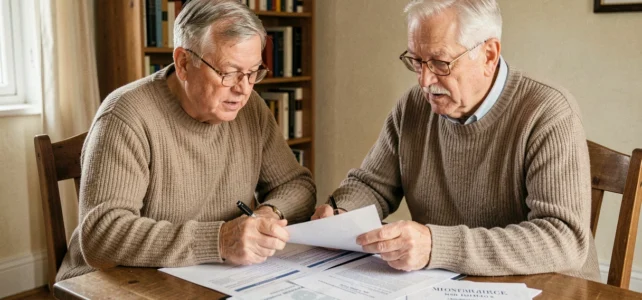
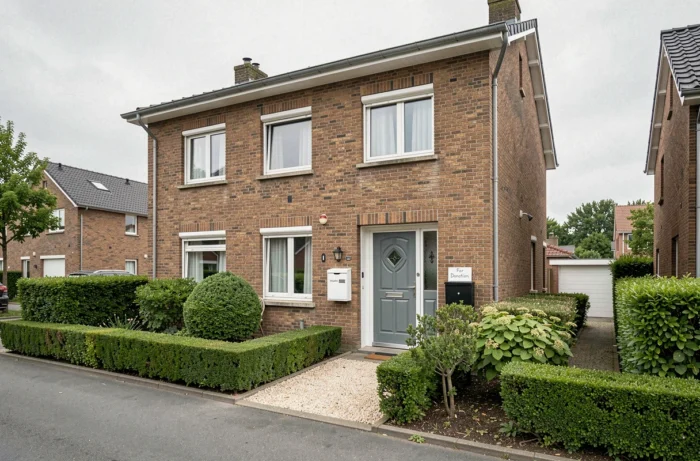
Giving a house while still alive in Belgium means transferring real estate to a loved one while organizing one’s succession in advance. This operation allows for a reduction of the taxable base at the time of death, but it requires a mandatory visit to a notary and the payment of donation taxes that vary depending on the region where the donor resides.
Walloon Reform 2028: Why Some House Donations Are Being Deferred
A Walloon decree from December 5, 2024, provides for a halving of the rates for real estate donation taxes in Wallonia starting January 1, 2028. The maximum rates in direct line would drop from 27% to 14%, and from 40% to 20% for all other persons.
This change creates an unprecedented situation. Walloon families are considering deferring their real estate donations to benefit from the new rates in 2028. Some tax experts are already calling Wallonia a “new tax paradise” in terms of real estate transmission.
The calculation deserves to be discussed with a notary: waiting until 2028 assumes that the donor remains in good health, that the property does not lose value, and that the law is not changed by then. When discussing the topic of house donation in Belgium, this Walloon reform profoundly changes the decision-making process between giving now or waiting.

Notarial Deed and Real Estate Donation Taxes by Region
Unlike a cash gift that can be made via bank transfer, the donation of real estate requires a notarial deed. No hand-to-hand gift is possible for a house or land. The notary drafts the deed, registers it, and the donation taxes are collected at that time.
The rates differ according to the region of the donor’s tax residence (not according to the location of the property). Here are the current main points:
- In the Walloon Region, the rates in direct line range from 3% to 27% in brackets, with the reform planned for 2028 that will halve these rates.
- In Brussels, the rule of progressive reserve has been removed for real estate donations made since January 1, 2016: the donated property will no longer be fictitiously added to the estate, even if the donor dies within three years.
- In the Flemish Region, the rates in direct line start at 3% for the first brackets and increase progressively, with its own system of brackets and allowances.
This regional difference means that the same house donation can cost thousands of euros more or less depending on the donor’s residence. Changing tax residence before giving is a strategy that exists, but it is closely scrutinized by the administration.
Donation with Usufruct Reserve: Staying in Your Home After Giving
You give your house to your children but wish to continue living there. This is the principle of donation with usufruct reserve. The donor retains the right to occupy the property or receive its rents. The children receive bare ownership.
Upon the death of the usufructuary, the usufruct automatically extinguishes. The children become full owners without going through a succession for this property. The donation taxes, already paid at the notarial deed, are not owed a second time.
Precaution on Declared Value
The value recorded in the notarial deed serves as the basis for calculating the taxes. Undervaluing the property exposes one to a tax adjustment. The notary generally recommends a realistic estimate, sometimes supported by an expert report, to avoid any subsequent disputes.
Suspicious Five-Year Period: The Trap of Cash Gifts Linked to Purchase
This point often goes unnoticed. A parent gives a sum of money to their child to help them buy a house. This cash gift is a movable donation. If it is not registered and the donor dies within the five years following the gift, the sum is reintegrated into the estate.
Inheritance taxes, which are significantly higher than donation taxes, then apply. This five-year period applies to all three regions for unregistered movable donations.
Registering a Cash Gift to Secure Transmission
The solution is to voluntarily register the movable gift. The taxes on movable donations are much lower than inheritance taxes. Once registered, the gift is definitively excluded from the estate calculation, even if death occurs shortly afterward.
In practice, many families combine two operations: a registered cash gift to finance the contribution, followed by a notarial real estate donation a few years later to transfer another property. Each operation must be considered within a comprehensive transmission plan.
Donation Every Three Years: A Fractionation Strategy in Wallonia
In the Walloon Region, real estate donation taxes are calculated in progressive brackets. Splitting the donation into several acts spaced three years apart allows one to start over at the lower brackets with each new donation.
Why three years? Because Wallonia applies the reserve of progressivity: if the donor dies within three years, the value of the donated property is fictitiously added to the estate to determine the applicable rate. By spacing donations more than three years apart, each bracket starts from the bottom of the scale.
This technique has a cost (notary fees for each act) and assumes that the donor lives long enough. It remains relevant for significant real estate assets but has no interest for a modest-value house given all at once.
In Brussels, this strategy has lost its usefulness since the removal of the reserve of progressivity in 2016. In Flanders, the calculation rules follow a different mechanism that the notary will detail on a case-by-case basis.
A house donation in Belgium is not just about signing a deed. The donor’s region, the Walloon reform of 2028, usufruct reserve, and the suspicious five-year period for cash gifts: each parameter alters the tax bill. The notary remains the only professional authorized to draft the deed and accurately calculate the taxes owed based on your family situation.