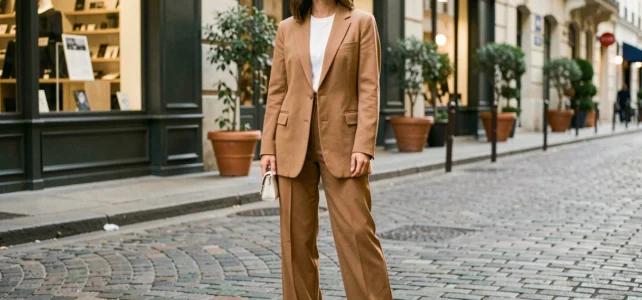
Each new season brings its share of key pieces highlighted across all networks. The natural reflex is to replicate the looks seen on runways or from content creators. The result: identical silhouettes on the street, and a wardrobe that no longer resembles that of the person wearing it.
This season’s fashion trends deserve better than a copy-paste approach. They benefit from being filtered, adapted, and sometimes reinterpreted to serve a style that remains your own.
Layering and proportions: the fashion trend that changes according to body shape
Have you ever noticed that some layering looks sophisticated on a model but messy when replicated? The difference rarely lies in the budget. Layering relies on a calculated play of proportions, not on a stack of layers.
Specifically, the rule that works this season is to contrast lengths. A long coat worn over a short blazer creates a vertical line that elongates the silhouette. A satin dress layered over straight pants produces a contrast of materials without adding unnecessary volume. Layering becomes a style discipline in its own right.
To avoid falling into the “all layered” look, limit visible layers to a maximum of three. Choose a statement piece (a structured coat, a smooth leather jacket) and build around it. Among the most recent inspirations detailed in Oka Mag’s fashion section, this principle of layered construction regularly appears, applied to very different wardrobes.
Mesh, chic athleisure, and seasonal materials: deciphering the real signals
Not all trends carry the same weight. Some last a season, while others redefine clothing codes sustainably. Two movements stand out this year for their ability to integrate into a personal wardrobe without distorting it.
Mesh replaces cut-out designs
Mesh establishes itself as the airy material of the season, where bold openings in fabric dominated previous collections. This shift towards transparent and lightweight textures changes the way sensuality is approached in an outfit. A mesh piece (a top, a sleeve detail, a panel on a skirt) adds texture without exposing in the same way.
The appeal of this material lies in its subtlety. It slips into an everyday look without shouting “trend,” unlike cut-outs that polarized more.
Athleisure takes a more dressed-up direction
Sporty comfort is no longer limited to joggers and sneakers. Athleisure combines with dressed pieces like leather pants, a flowy skirt, or low heels. This mix gives a more chic direction, moving away from the 100% sportswear looks of past seasons.
Why this shift? Because casual wear has gained legitimacy in contexts that were previously closed to it (office, outings). Lines are shifting, and the boundary between “sport” attire and “city” attire blurs a little more each season.
Color trends and accessories: choices that make the difference
The key pieces of a wardrobe attract attention. Colors and accessories, on the other hand, build the identity of a style. This is often where the distinction lies between a look seen everywhere and a recognizable silhouette.
The colors that matter this season
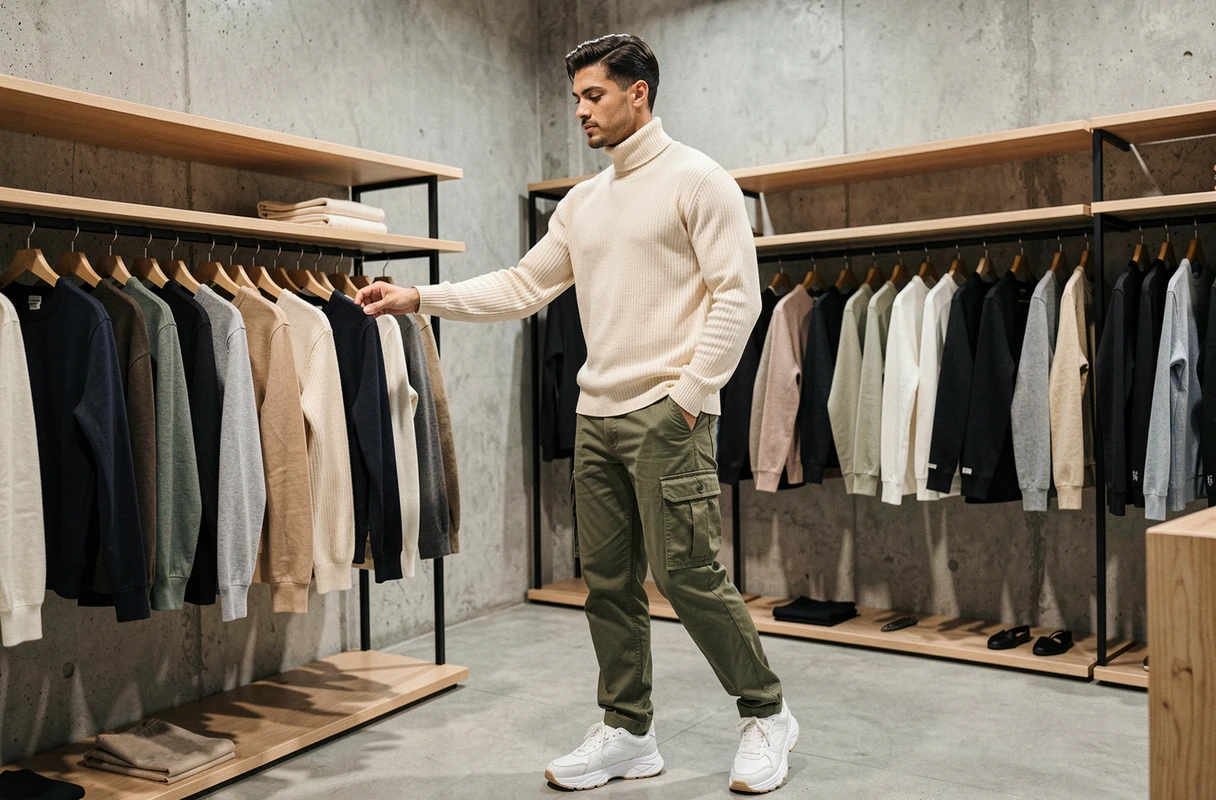
Palettes oscillate between intensity and natural tones. Burgundy surprises by appearing on military-inspired pieces. Olive green, khaki, and brown remain stable values, while touches of bright colors (orange, yellow, sky blue) serve as focal points in a sober outfit.
Choosing a single strong color per outfit avoids overload. For example: wide khaki pants, a neutral top, and a burgundy scarf. The “trendy” color is present, but it does not dictate the whole.
Accessories gain prominence
This season, accessories are no longer just finishing touches. They take center stage in building a look. The pieces that are most frequently seen in current collections include:
- The scarf, worn tied around the neck, as a belt, or on a bag, as a graphic element that breaks the monotony of a solid outfit
- Nostalgic-looking brooches and jewelry that add character to a blazer or coat without altering the cut
- More assertive bags (geometric shapes, bold colors) that replace discreet models and become the focal point of the silhouette
A well-chosen accessory transforms a look more than an additional clothing piece. It is also the least expensive lever to test a trend without revamping your wardrobe.
Embracing trends without losing your personal style
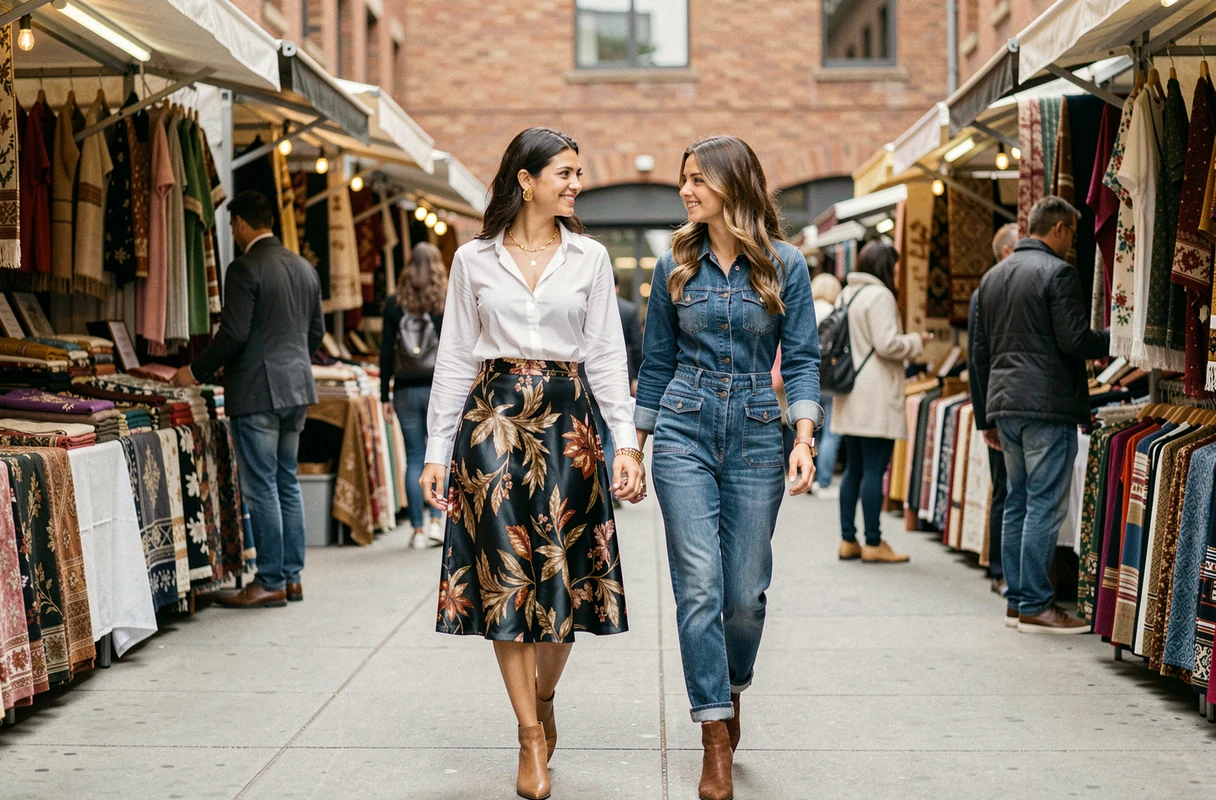
Here’s the most common trap: buying five trendy pieces that don’t work together and even less with the rest of your wardrobe. To avoid this pitfall, a simple method works. First, identify the constants in your wardrobe, the pieces you wear reflexively, season after season.
Next, test one trend at a time. Integrating a new piece into a familiar outfit allows you to see if it aligns with your way of dressing, not with that of an editorial. A mesh top worn under a blazer you already own, a burgundy scarf added to a classic black look: the trend complements, not replaces.
The most interesting looks this season share a common point. They mix personal basics with one or two current elements. The long flowy dress works with minimalist shoes you’ve worn for three years. The structured wide pants pair with a sweater you already have in four colors.
- Filter trends by compatibility with existing pieces in your wardrobe
- Limit “pure trend” purchases to two or three pieces per season, prioritizing those that can be combined with the most outfits
- Test the piece in three different looks before validating the purchase: if it only works in one context, it will end up in a closet
Personal style is built through a collection of coherent choices, not by complete renewal each season. This season’s fashion trends offer enough diversity (materials, colors, accessories) for everyone to find an element that enriches their wardrobe without betraying it. Better to have a wardrobe of twenty pieces that work together than a closet of fifty items that tell no story.