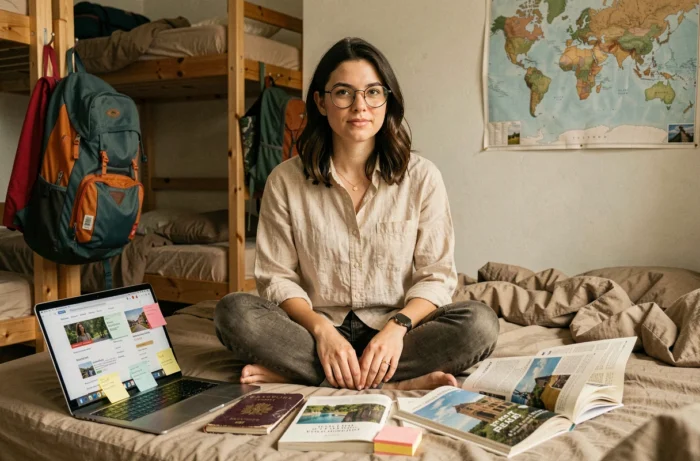
Around-the-world travel involves dozens of nights in countries with very different standards, prices, and regulations. The choice of accommodation represents about a third of the total budget for a long-term trip. Preparing well means balancing comfort, cost, and flexibility at each stop, rather than applying a one-size-fits-all recipe across all continents.
Local regulations for short-term rentals: a filter before price
Before comparing rates, the first question to ask is about the legality of the listing being viewed. Rules regarding short-term rentals are tightening in several regions around the world, and booking non-compliant accommodation exposes travelers to last-minute cancellations without recourse.
In Spain, for example, a national registration number has been mandatory on listings since July 1, 2025, for the current system, without replacing regional or municipal licenses. For a traveler, this means checking this number against the official registry of the relevant region.
The concrete risk: a listing removed by the platform after booking, sometimes just days before arrival. On a long itinerary, losing accommodation in a city with high tourist demand can disrupt several stages.
Keeping a backup solution, avoiding non-refundable bookings in countries where regulations evolve quickly, and favoring a hotel or hostel subject to a more stable framework in case of doubt are reflexes that help avoid this type of situation.
To explore the different options available depending on the destinations, accommodation on Tour du Monde details options suited to each type of traveler.
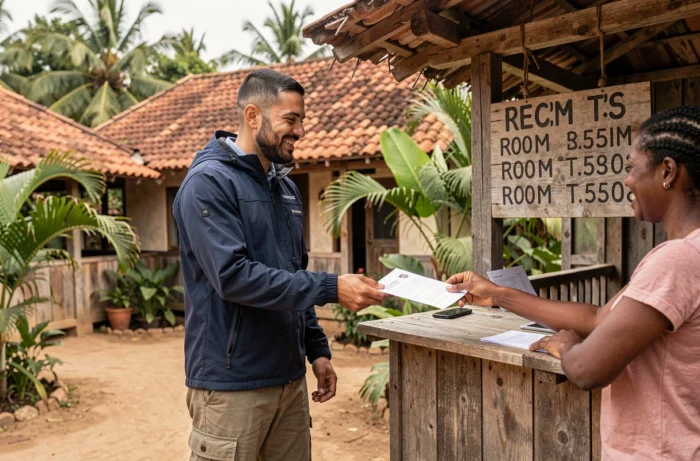
Accommodation budget for a round-the-world trip: distribute rather than minimize
A common mistake is to look for the lowest rate for each night. On a trip lasting several months, distributing the budget between budget nights and comfort nights better protects against fatigue and unpleasant surprises.
Alternating types of accommodation by geographic area
In Southeast Asia, small neighborhood hotels (often called guesthouses) offer private rooms at very low rates. Booking a decent room there costs a fraction of what one would pay in Western Europe or Oceania.
In countries where the cost of living is higher, switching to a dormitory in a youth hostel or house sitting can help compensate. The idea is not to always sleep cheaply, but to use the savings made in budget-friendly areas to afford comfortable accommodation where prices are structurally high.
Three criteria that weigh more than the displayed price
- The cancellation policy: on a flexible itinerary, a non-refundable low-price booking often ends up being more expensive than a slightly higher cancellable booking, especially if plans change along the way.
- Location relative to transportation: accommodation that seems attractively priced but is far from transport can incur taxi or local transport costs that negate the savings made.
- Access to a kitchen: preparing a few meals oneself in an equipped accommodation significantly reduces the food budget, the second largest expense after accommodation.
Eco-labels and sustainable accommodation: distinguishing the real from the marketing
More and more platforms display “sustainable” or “eco-friendly” badges next to certain accommodations. The problem: not all labels are based on a verifiable framework.
The GSTC (Global Sustainable Tourism Council) finalized an update to its standards for hotels and tour operators in 2025, with expanded requirements on climate resilience, biodiversity, responsible purchasing, and social inclusion. Accommodation certified by an organization recognized by the GSTC offers more guarantees than a simple self-proclaimed mention.
For a round-the-world traveler, a useful reflex is to look for the precise name of the displayed certification and verify that it corresponds to an identifiable framework. A vague mention like “we are eco-friendly” without a link to a certificate or third-party audit does not constitute a guarantee.

Climate risk and accommodation choice: an often-overlooked angle
Climate change is altering the conditions of stay in several popular destinations. Heat waves in the Mediterranean, more intense monsoons in South Asia, shifted seasons in Latin America: checking the accommodation’s amenities against extreme weather conditions becomes a key selection criterion.
Specifically, this means checking for functional air conditioning (not just a fan) in areas of high heat, or adequate heating at altitude. Recent reviews, dated from the same season as the planned stay, provide more reliable indications than a static description.
This climate filter also influences the travel schedule. Shifting a stop by a few weeks to avoid a heat peak or rainy season can sometimes lead to finding available accommodations at better prices, with superior comfort.
Booking flexibility: what changes between a month and a year of travel
On a typical two-week stay, booking all nights in advance is common. On a round-the-world trip, this approach becomes a handicap.
- The first nights of each major leg (arrival in a new country, time zone adjustment) benefit from being booked in advance to secure the welcome.
- The following nights remain open: recommendations from other travelers on-site, local opportunities, or a simple change of plans justify this flexibility.
- Periods of local high season (festivals, school holidays in the country) are the only exception where booking several weeks in advance is justified, lest one find only accommodations outside budget.
Keeping at least half of the nights unbooked provides the necessary margin to adapt the itinerary without losing money on cancellations or paid nights not used.
The choice of accommodation on a round-the-world trip relies less on seeking the best universal value for money than on the ability to adapt criteria to each context. Checking the regulatory compliance of a listing, balancing economy and recovery, and integrating local climate conditions into the decision are three filters that, when applied systematically, reduce unpleasant surprises far more effectively than a ranking of platforms.