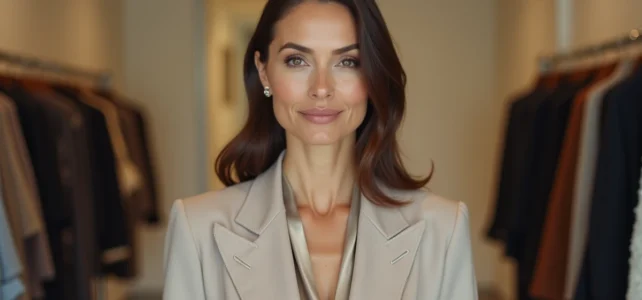
Anne-Elisabeth Lemoine’s style on the set of C à vous does not rely on spontaneous crushes. Each outfit adheres to a technical specification related to the constraints of live broadcasting, set lighting, and the coherence of France 5’s on-air image.
Technical Constraints of Styling for C à vous
A TV look is primarily built around light. The studio lights generate a cool color temperature that flattens pastel shades and makes fine patterns vibrate. Solid fabrics with medium saturation perform better in multi-camera setups than tight prints, which create a moiré effect on screen.
The seated posture also alters how a garment falls. A jacket that is too structured rides up at the shoulders as soon as the presenter leans toward her guest. Slightly deconstructed blazers or thick knit jackets avoid this recurring issue.
The tight framing used during face-to-face interviews with guests focuses attention on the bust and neckline. This is why we often see Anne-Elisabeth Lemoine wearing V-necks, open necklines, and short necklaces that structure this area without overwhelming it. A turtleneck, by comparison, flattens the silhouette on screen and reduces the visual separation between the chin and torso.
Another rarely documented parameter concerns the chromatic coherence with the set decor. The blue-gray background of C à vous necessitates avoiding medium blues, which blend into the background. Warm tones (terracotta, brick red, mustard yellow) or strong neutrals (black, off-white, camel) create the necessary contrast.
To delve deeper into these wardrobe choices, a detailed analysis of Anne-Elisabeth Lemoine’s stylists helps understand the logic behind each silhouette.
Media Stylist: A Profession Distinct from Classic Image Consulting
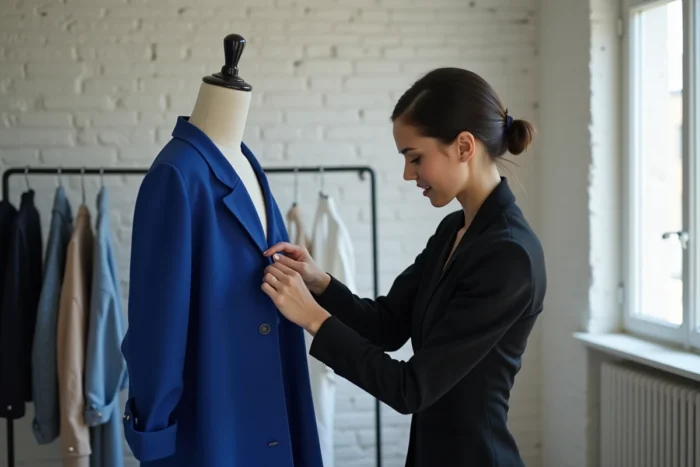
Personal image consulting and media styling do not require the same skills. An image consultant works on the client’s morphology, colorimetry, and lifestyle. A media stylist additionally incorporates broadcasting constraints: camera rendering, continuity between shows in the same week, adherence to a visual editorial line dictated by the channel.
The LANA WOOL agency, founded by image consultant Dylan T., illustrates this recent specialization. Its positioning explicitly covers TV shows, filmed interviews, conferences, and galas. This type of profile is distinguished by a dual reading of the garment: what it conveys in person and what it conveys on screen.
The professionalization of this job has transformed how presenters build their wardrobes. Where a host once chose her outfits alone or with the occasional help of a brand’s press officer, the media stylist plans looks over several weeks, taking into account the editorial calendar (political guests, special evenings, shows from Cannes or other locations).
Criteria for Selecting a Stylist for Live Broadcasts
- Mastery of textile rendering on screen: knowledge of materials that catch light (satin, wild silk) and those that absorb it (crepe, felted wool)
- Ability to source pieces compatible with French or European brands, in line with the public channel’s image
- Management of loan and return schedules with fashion houses, ensuring sufficient rotation to avoid wearing the same piece twice in the same month
- Anticipation of sensitive topics: avoiding a visible logo during a report on fast fashion, for example
Anne-Elisabeth Lemoine and the Choice of French Brands on Air
Le Journal des Femmes recently documented a French outfit worn by Anne-Elisabeth Lemoine, with a total price around 460 euros. This price positioning indicates a choice of mid-range brands, neither luxury nor mass-market. This segment corresponds to French contemporary ready-to-wear labels (like Sandro, Maje, Ba&sh, Rouje) that offer cuts suitable for TV framing.
This choice is not trivial on a public channel. Wearing luxury items worth several thousand euros would raise questions of editorial coherence. Wearing ultra-fast fashion would contradict the societal issues regularly addressed in C à vous. France is also preparing legislation targeting ultra-fast fashion, making the sourcing of TV outfits even more sensitive for presenters on public channels.
Recurrence of Certain Pieces in the TV Wardrobe
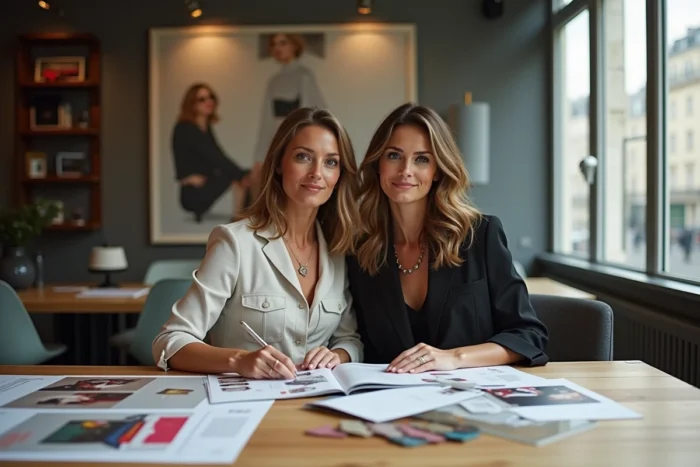
Anne-Elisabeth Lemoine has stated that she sees no reason to impose an age limit on certain garments. This stance, reported by Gala, reflects a clothing approach based on cut and material rather than generational codes. Jumpsuits, wide trousers, and blazers frequently appear in her on-set outfits.
Grazia noted her ability to wear trends like flared pants while maintaining an appearance compatible with the show’s tone. The on-set style relies on a balance between moderate trendiness and screen readability.
TV Fashion and the Evolution of Anne-Elisabeth Lemoine’s Looks Over the Seasons
Le Journal des Femmes has traced the fashion evolution of Anne-Elisabeth Lemoine since her beginnings on television. The early seasons show more classic outfits, with structured blazers and dark colors. Recent seasons reveal a more diverse palette and fluid silhouettes.
This evolution reflects two parallel movements:
- The rise of the dedicated stylist role, which has allowed for a measured risk-taking on colors and cuts
- The changing visual codes of C à vous, whose decor and production have evolved to allow for more wide shots
- The influence of social media, where each outfit is scrutinized and commented on, prompting more frequent wardrobe updates
Anne-Elisabeth Lemoine’s Instagram account serves as a complementary showcase to the set. The looks are photographed in a context different from the screen, allowing for the display of details invisible on air (textures, accessories, shoes).
TV styling is no longer limited to choosing an outfit on the morning of the live broadcast. It is a job of visual editorial planning, with technical, budgetary, and image constraints that the general public largely underestimates. The case of Anne-Elisabeth Lemoine on C à vous shows how much this profession shapes the identity of a show as much as its editorial content.