
What types of leisure activities truly capture attention according to age groups, and where do the gaps lie between what families, young people, and seniors are looking for? The diversity of leisure is not just a catalog of activities: it reflects distinct needs in terms of health, social connection, and personal development. Comparing these profiles allows us to identify the blind spots in the current offerings.
Leisure and the right to free time: a framework often overlooked
Most guides on leisure activities list outings or workshops without mentioning the legal foundation that underpins them. The Charter of Leisure from the World Leisure Organization (WLO) establishes a clear principle: every person, adult or child, has the right to sufficient time for rest and leisure. This text places the issue in the realm of social rights, not mere entertainment.
For paid workers, the Charter demands a reasonable limitation on working hours, periodic paid leave, and compensation for public holidays. It also applies to individuals performing unpaid work, such as family caregivers, a demographic rarely targeted by mainstream leisure offerings.
Considering leisure on Essentium from this fundamental rights perspective changes the lens: access to relaxation activities is not a luxury, but a recognized component of social life and health.
Activities by age group: comparative table of expectations
Segmentation by age remains the most effective lever for structuring a leisure offering. Expectations vary significantly between children, young adults, families, and seniors, both in terms of the nature of activities and the benefits sought.
| Age Group | Preferred Types of Leisure | Main Benefit Sought |
|---|---|---|
| Children (3-12 years) | Group games, creative workshops, nature outings | Motor development and socialization |
| Teenagers (13-17 years) | Video games, urban sports, cultural activities | Independence and group belonging |
| Young Adults (18-35 years) | Sports, travel, festivals, creative hobbies | Disconnection and experience |
| Families | Cultural visits, outdoor outings, board games | Intergenerational shared time |
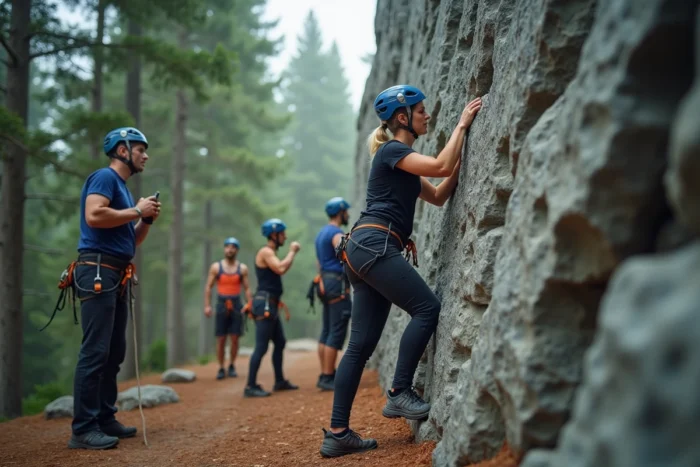
| Seniors (60 years and older) | Hiking, manual workshops, wellness activities | Maintaining social connections and physical health |
This table highlights a structural gap. Children and seniors share a need for socialization, but the formats offered diverge radically. Seniors remain underrepresented in municipal leisure offerings compared to children, even though their need for social connection is at least equivalent.
Adapted leisure and inclusion: territorial initiatives that change the game
Inclusive leisure is no longer limited to families or children. Structured territorial initiatives are emerging, particularly in Auvergne-Rhône-Alpes, with facilities, pathways, and awareness actions dedicated to people with disabilities.
The activities involved cover a wide spectrum: hiking, cycling, horseback riding, swimming, team sports. The approach is based on adapting practices to individual capabilities, rather than creating separate pathways. Inclusion comes from adapting existing leisure activities, not from parallel circuits.
- Marked hiking trails accessible by wheelchair, with appropriate signage
- Swimming sessions supervised by instructors trained in motor and sensory disabilities
- Mixed team sports (able-bodied and people with disabilities) in local community organizations
This structured inclusion logic modifies the very definition of “leisure for all.” It goes beyond the slogan to become a measurable criterion of territorial accessibility.
Creative workshops and board games: why these leisure activities resist screens
In a context of strong digital competition, creative workshops and board games maintain their appeal. Libraries, such as those in the Saint-Quentin-en-Yvelines network, regularly schedule board game sessions, card games, and party games open to all ages.
Board games create a physical meeting space that digital cannot replace. Families find an intergenerational format accessible without expensive equipment. Seniors also participate, making it one of the few truly cross-generational formats.
Creative leisure follows a similar dynamic. Handicrafts, sewing, drawing, or modeling attract diverse audiences. The appeal lies in the tangible aspect of the result: producing an object, finishing a game, sharing a creation. However, low-cost creative activities remain under-documented compared to leisure requiring material investment.

Family outings and vacations: the important selection criteria
Family outings account for a significant portion of leisure demand. The selection criteria go beyond mere interest in the activity:
- Geographical accessibility (proximity or ease of public transport)
- Adaptability to multiple age groups simultaneously (children, parents, grandparents)
- Overall cost (entry, transport, dining) relative to the duration of the activity
- Possibility of outdoor activities, with enough space for children
During vacations, the logic reverses: families accept a longer journey if the activity offers an experience difficult to replicate in daily life. Cultural visits, natural parks, and festivals capture this niche.
The relationship between cost and duration of engagement remains the primary decision filter for families with children, well before the nature of the activity itself.
The diversity of leisure in France is measured less by the quantity of available offerings than by their ability to reach audiences typically on the margins: family caregivers, isolated seniors, people with disabilities. Territorial accessibility initiatives and the recognition of leisure as a fundamental right outline a more structuring direction than the mere multiplication of activities.