
A real estate project in Charente is prepared differently depending on whether the property is intended for habitation or rental. The department presents a heterogeneous market: some municipalities show rising prices over the year, while Angoulême indicates a stabilization signal, with a median price slightly down recently but an increase over five years. This local disparity conditions every decision, from the choice of sector to the financial setup.
Energy diagnosis and rental constraints in Charente
Before even looking for a property, a regulatory point deserves to be understood. Since January 1, 2025, a property classified G in the DPE can no longer be rented out under a new lease. Class F will follow in 2028, and class E in 2034.
For a purchase intended for rental in Charente, this rule radically changes the analysis. The old Charente housing stock, largely composed of stone houses, often has poor energy performance. Acquiring a property classified F or G without budgeting for thermal renovation amounts to buying an unusable asset in the short term.
The direct consequence: the displayed purchase price does not reflect the actual cost of the project. It is necessary to add the amount for insulation work, replacement of the heating system, or even ventilation. Specialized platforms like Immo Charente allow filtering listings and quickly spotting properties with problematic DPEs.
A property classified D or C, even slightly more expensive to purchase, offers more predictable rental profitability. The DPE has become a decisive criterion as important as the price per square meter.
Real estate prices in Charente: understanding the disparities between municipalities
The Charente market cannot be summarized by a departmental average. The price gaps between rural areas, intermediate towns, and the Angoulême agglomeration are significant. Reasoning based on a departmental median price masks very different realities.
Angoulême and its suburbs
Angoulême shows a median price slightly down over the year, which distinguishes it from the overall departmental trend. This discrepancy may represent an opportunity for residential purchase, provided two points are checked: the quality of the building (the old town contains older buildings that are sometimes poorly maintained) and the proximity of services.
Peripheral municipalities like Gond-Pontouvre or Soyaux offer more accessible prices, but rental demand is also weaker there. For a rental investment, local rental pressure is as important as the purchase price.
Rural areas and character towns
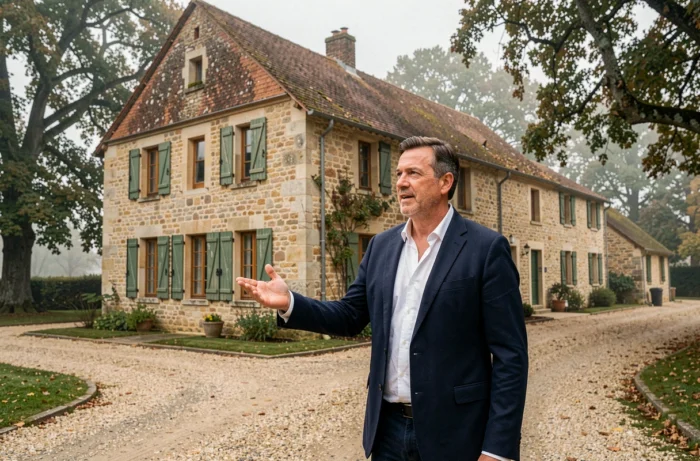
The south of Charente attracts buyers looking for character homes at moderate prices. The entry ticket remains low compared to neighboring Charente-Maritime. However, resale may take time. A rural property acquired for living responds to a different heritage logic than an urban rental investment.
Financial setup for a real estate purchase in Charente
Financing a real estate project relies on three interacting components: personal contribution, bank loan, and renovation budget. In Charente, the renovation budget often weighs more heavily than elsewhere due to the average age of the housing stock.
- The personal contribution determines the rate offered by the bank and the amount that can be borrowed. The more it covers a significant part of the price, the better the loan conditions.
- The mortgage must include a realistic renovation budget. Underestimating energy renovation work exposes one to a budget overrun that jeopardizes the entire financing plan.
- Renovation aids (MaPrimeRénov’, zero-interest eco-loan) can reduce the remaining cost, but their amounts and conditions change every year. Checking the applicable schemes at the time of purchase is a step not to be postponed.
Incorporating the cost of renovations right from the loan simulation avoids unpleasant surprises. Banks generally accept including a renovation budget in the main loan, provided precise quotes are provided.

Rental purchase in Charente: concrete pitfalls to anticipate
Rental investment in Charente attracts with seemingly high gross yields, linked to contained purchase prices. However, several parameters reduce the actual net yield.
- Vacancy: outside Angoulême and Cognac, rental demand remains modest. A property vacant for several months cancels out the gain from an attractively theoretical rent.
- Condominium fees in older buildings in Angoulême can absorb a significant part of the rent, especially if façade or roofing work is voted on.
- Rental taxation has evolved: the new status of private landlords changes the conditions for deduction and depreciation for certain regimes. It is necessary to inquire about the applicable tax rules before signing.
- Remote management, for an investor who does not reside in Charente, generates rental management fees (around a few percentage points of the rent) that weigh on profitability.
An attractive gross yield does not guarantee a satisfactory net yield. The gap between the two depends on vacancy, charges, taxation, and management costs.
Targeting the right type of property
Two-bedroom and small three-bedroom apartments in the city center of Angoulême or Cognac concentrate the most stable rental demand. Large rural houses, appealing on paper, find it difficult to attract year-round tenants. For seasonal rentals, southern Charente and proximity to the Cognac vineyard offer potential, but local regulations on furnished tourism rentals are tightening in several municipalities.
The Charente real estate market rewards buyers who take the time to check the DPE, compare prices by municipality, and accurately estimate the renovation budget. The margin for negotiation remains wider than in tense areas, allowing room for a well-calibrated project, provided one does not confuse low prices with good deals.