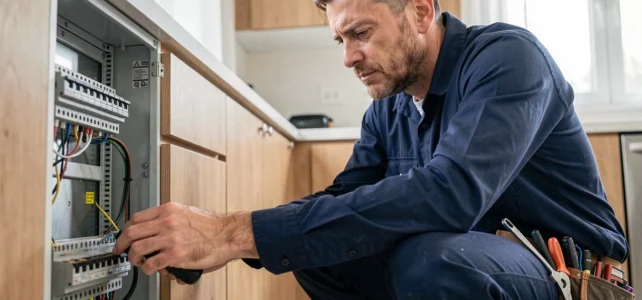
A circuit breaker tripping on a Sunday evening, a socket melting behind the refrigerator, a renovation quote to validate within the week: in each case, we are looking for an electrician who is available, competent, and covered by the right insurance. The problem is that most useful checks take less than three minutes, but almost no one does them before signing.
Check an electrician in three minutes before calling
Even before picking up the phone, you can eliminate a good portion of dubious profiles with two quick checks. The first: type the name of the company or its SIREN number into the Sirene directory of INSEE. A tradesperson whose company is deregistered no longer has the right to invoice. The status “active” must appear clearly.
The second check concerns the ten-year insurance certificate. You request it by email or phone, and you verify three points: the validity date, the coverage scope (electrical work, not just “building”), and the exact name of the company. An expired ten-year certificate or one issued in the name of another entity does not protect the client.
On vite-un-electricien.com, you can directly access professionals listed by geographical area, which speeds up this initial sorting step.
The third check, often overlooked: ask if the tradesperson holds the Qualifelec qualification. This label, awarded after an audit, certifies technical competence assessed by an independent body. Not all good electricians have it, but its presence is a reliable signal.
Certificate of conformity and NF C 15-100: the question that filters professionals
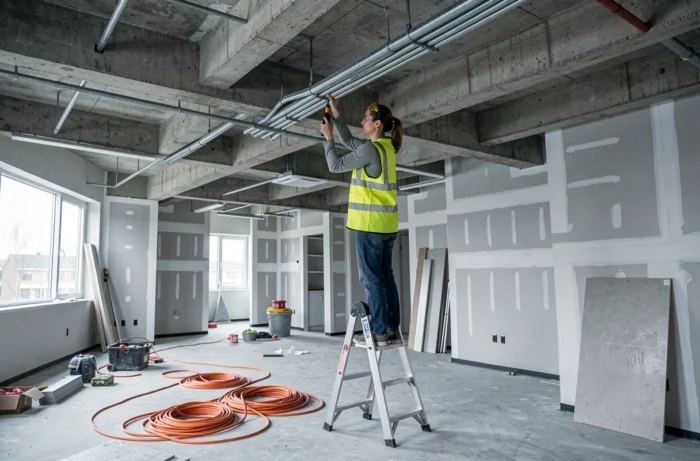
Since September 1, 2025, a rule has changed regarding how an installer fills out the Consuel certificate of conformity. The electrician must now declare which version of the NF C 15-100 standard applies to the site. The 2024 series, applicable from this date, introduced changes to electrical panels, differential protections, and electric vehicle charging installations (IRVE).
In practice, asking the question “which version of the NF C 15-100 are you applying on this site?” allows you to distinguish a tradesperson who follows regulatory developments from one who still works with outdated practices. This is not a trap: it is a legitimate technical question, and a current professional will answer it without hesitation.
Special case: charging station or photovoltaic
If the project includes the installation of a charging station, the IRVE qualification is a distinct prerequisite from the general electrician qualification. The NF C 15-100 series of 2024 has strengthened the requirements in this area. A tradesperson skilled in traditional domestic wiring is not automatically qualified to install a compliant charging station.
It is recommended to check that the IRVE qualification is mentioned on the professional’s certificate or Qualifelec certificate. Feedback varies on the availability of these profiles depending on the regions, but in urban areas, you can generally find several qualified tradespeople within half an hour.
Comparing electrician quotes: what matters beyond price
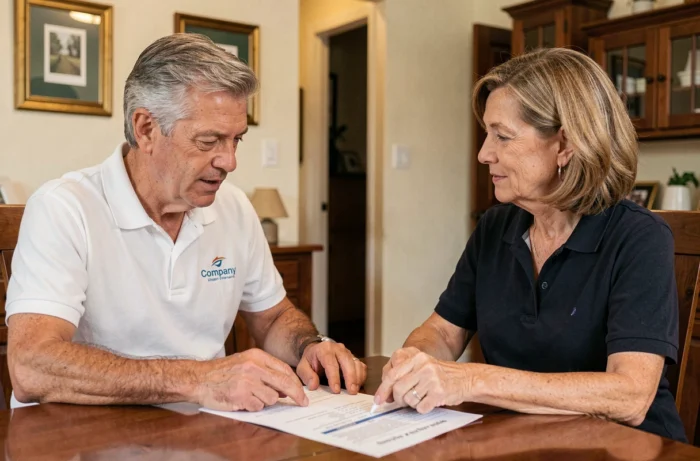
Requesting multiple quotes remains the most common reflex, and it is a good starting point. The real sorting criterion is not limited to the total amount. A well-written quote details:
- The precise designation of the materials (brand, reference, circuit breaker ratings) and not just “electrical supplies”
- The estimated number of hours of labor, separate from the cost of parts
- The mention of the applicable standard and the reference to the Consuel certificate if the site requires it
- The warranty conditions and the validity period of the quote
A vague quote regarding materials or the applicable standard often indicates poorly managed work. Conversely, a more expensive but detailed quote item by item reflects a structured work methodology.
Beware of abnormally low prices
A price significantly lower than average sometimes hides the absence of ten-year insurance or the use of uncertified materials. You do not need to know market prices down to the last cent: just compare three quotes to spot the one that deviates significantly from the others.
Customer reviews and word of mouth: how to filter the signal from the noise
Online reviews are a useful tool, provided you read them methodically. A profile with only maximum ratings and generic comments (“very good, I recommend”) is less trustworthy than a profile with a few mixed reviews but detailed responses from the professional.
An electrician who responds to criticisms by explaining what happened shows that he takes responsibility for his projects. This is a more reliable indicator than the average rating.
Word of mouth remains the most effective channel for local interventions. A neighbor who has had their electrical panel redone and can show the result is better than ten anonymous reviews. You can also ask your property manager: building managers regularly work with electricians and quickly identify those who meet deadlines and standards.
- Check the date of the reviews: an active profile with recent feedback is more telling than one with a history several years old
- Look for reviews that mention the type of work done (compliance, troubleshooting, new installation) to ensure that the professional has experience with the planned project
- Cross-reference Google reviews with those from specialized platforms to detect any potentially artificial profiles
The combination of administrative verification, technical question about the standard, and careful reading of reviews forms a quick and effective filter. It does not eliminate all risks, but it significantly reduces the likelihood of encountering an unqualified or poorly insured tradesperson. The time invested in these checks, rarely more than ten minutes, avoids weeks of disputes after poorly executed work.