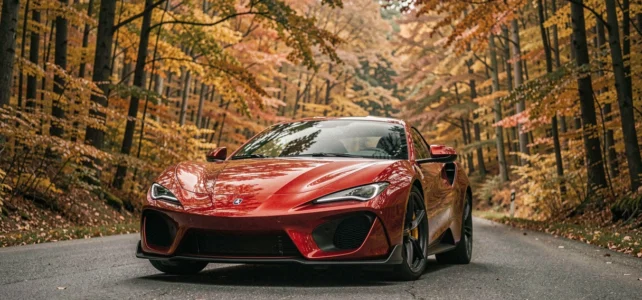
Comparing high-performance cars in Belgium first involves measuring what the legal and insurance framework truly allows. Between the tightening of fines for speeding since February 2026 and skyrocketing insurance premiums on powerful models, the joy of driving is negotiated as much on the road as on paper. Which models offer the best ratio between perceived performance and Belgian constraints?
Fines and insurance in Belgium: the real cost of a powerful car
Since February 1, 2026, the additional fines applied by Belgian police courts have increased from 70 to 90. In practice, this represents an increase of about 25% in the actual amount of fines for significant speeding, particularly beyond +30 km/h in urban areas or +40 km/h outside urban areas.
This law of December 19, 2025, specifically targets drivers of very powerful vehicles who exploit their performance on open roads too much. For an enthusiast of strong sensations, the calculation changes: a sports car with over 300 horsepower costs significantly more to use daily than it did a year ago, not to mention the insurance.
On the insurance side, Belgian companies apply significant surcharges on high-power models. A young driver behind the wheel of a sports sedan pays a premium that is significantly higher than that of an identical profile in a city car. Several comparison sites listed in Belgium, such as those from meilleures-assurances-auto.be, confirm that fiscal power and engine size remain the primary factors in pricing.
For those who wish to access sports models without bearing these fixed costs, occasional rental of high-performance cars is a concrete alternative, as offered by Longdrivers in Belgium with a catalog focused on driving pleasure.
Comparison of accessible sports cars: power, price, and insurability
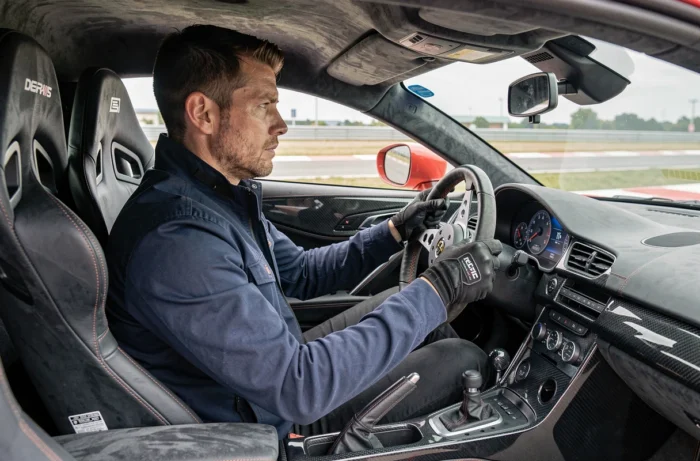
The table below compares several models frequently mentioned for thrill-seekers, incorporating criteria rarely placed side by side: power, type of transmission, and the level of insurance constraint in Belgium.
| Model | Power | Transmission | Insurance Constraint | Possible Track Use |
|---|---|---|---|---|
| Mazda MX-5 (ND) | Moderate | Rear-wheel drive | Low | Yes |
| Toyota GR Yaris | High | All-wheel drive | Medium | Yes |
| Ford Fiesta ST | Moderate | Front-wheel drive | Low | Yes |
| Porsche 718 Cayman | Very high | Rear-wheel drive | High | Yes |
| Mini Cooper S | Moderate | Front-wheel drive | Low to medium | Limited |
The Mazda MX-5 and Ford Fiesta ST stand out with a particularly favorable sensation/insurance cost ratio. Their power remains below the thresholds that trigger the heaviest surcharges, while offering a chassis designed for enjoyment.
The Toyota GR Yaris, with its all-wheel drive, represents a different compromise. Its high power increases the premium, but its versatility on wet roads (common in Belgium) partially offsets this additional cost with better handling in everyday use.
Conversely, a Porsche 718 Cayman places its owner in a significantly higher insurance bracket. For exclusive weekend or track use, the calculation may be justified. For mixed use, the overall annual bill is substantial.
Belgian circuits and driving experiences: legally harnessing power
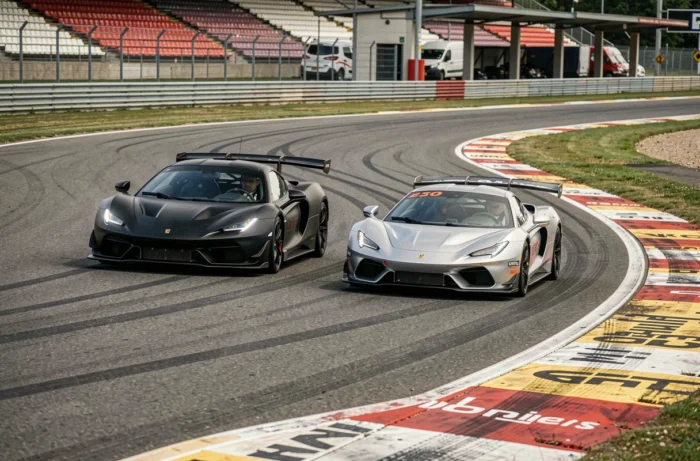
Belgium has several circuits accessible to the public, fundamentally changing the game for sports car enthusiasts. Rather than accumulating the risks of fines on open roads, the circuit offers a setting where power can be expressed without legal constraints.
- The Spa-Francorchamps circuit remains the reference, with open days for amateur drivers and driving experiences in Porsche or single-seaters offered by several organizations
- The Mettet circuit, more compact, suits drivers who want to hone their driving skills on a technical track without extreme speeds
- Orientation rallies like the Famenne Classic Rally (89 euros per team, breakfast and barbecue included) allow driving on closed roads with sports or vintage vehicles
The circuit remains the only place where the power of a sports car can be fully utilized without legal or financial risk. In Belgium, where sanctions are tightening, this distinction carries even more weight.
Debate on power restrictions for young Belgian drivers
In 2026, several Belgian media reported that the federal government is considering the possibility of banning powerful cars for young drivers, following the French model. To date, there is no legal power limit in Belgium for holders of a recent license.
This lack of restriction creates a paradoxical situation. An 18-year-old driver can theoretically buy and insure a sedan with over 400 horsepower. In practice, the filter occurs through the insurance price, which becomes prohibitive beyond a certain power threshold for novice profiles.
If such regulation were to pass, it would redefine the market for sports cars in Belgium. Models with moderate power (like the Fiesta ST or MX-5) would gain attractiveness, while high-end sports cars would lose part of their potential buyer pool.
Gradual access to power: what it would change
The discussed model would draw inspiration from a tiered access system, with a maximum power limit allowed during the first years of licensing. Manufacturers offering “beginner” versions of their sports cars (software restrictions, limited driving modes) would then be favored in the Belgian market.
For enthusiasts who want to experience power without waiting, track driving experiences completely bypass this potential constraint, as they do not require vehicle ownership.
The choice of a thrilling car in Belgium is now viewed through three overlapping filters: chassis pleasure, insurance costs, and the evolving regulatory framework. Models that check these three boxes without excessive compromise remain few, and that is precisely what makes the selection more interesting than a simple power ranking.