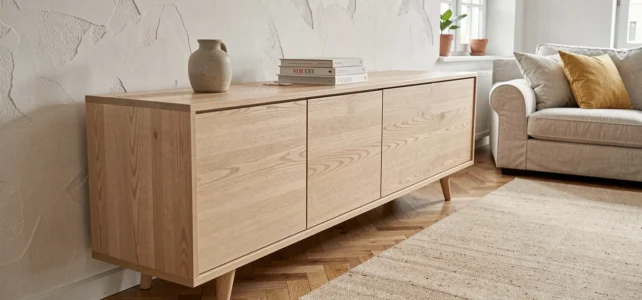
A sofa too deep to sit on properly, a coffee table blocking the passage to the balcony, a shelf whose dimensions do not match any available wall: the gap between an attractive piece of furniture in a photo and its actual daily use remains the most common trap in interior design. Choosing elegant and functional furniture requires considering several criteria before even focusing on color or style.
New European Regulation on Formaldehyde: What It Changes for Your Furniture
Since August 6, 2026, furniture and wood-based products sold in the European Union must comply with a formaldehyde emission limit of 0.062 mg/m³. A different threshold of 0.080 mg/m³ applies to other interior items. This limit, set by the REACH regulation (entry 77), replaces the old E1 benchmarks as a sufficient indicator for purchase.
Have you ever seen the mention “class E1” on a product sheet? It only referred to raw board. The new measure concerns the finished assembled product, including varnishes and adhesives. In practical terms, a piece of furniture can use E1 compliant panels and still exceed the limit once completed, according to data published by Eurofins and Sizemarker in August 2026.
For consumers, this means checking the REACH compliance of the complete piece of furniture, not just the base material. Reputable brands like La Maison Du Meuble now display this information on their product sheets, making comparison easier.
Modular and Reconfigurable Furniture: The Trend Redefining Interior Design
Fixed, heavy furniture designed for a single location is losing ground. The most documented trend in 2026 concerns modular, lightweight, and reconfigurable furniture. Pieces that can be moved, folded, or transformed according to the time of day.
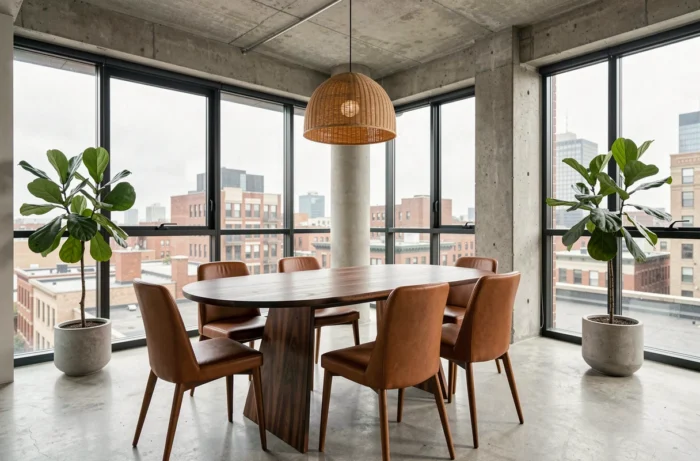
Why this shift? Living spaces are shrinking in large cities. A living room also serves as an office, sometimes as a guest bedroom. A modular sofa with detachable seats to create a reading nook in the evening better meets this reality than a classic three-seater model.
Modular furniture is not limited to sofas. This logic is found in stackable shelves, compact extendable tables, and consoles that transform into desks. The main selection criterion remains the sturdiness of the assembly systems: a module that detaches easily must also attach firmly.
How to Assess the Sturdiness of Modular Furniture
- Test the locking mechanism between modules: a good system produces no lateral play once engaged
- Check the weight of each separate element, as a module that is too light (hollow structure, thin panels) often indicates a compromise on durability
- Look for whether the manufacturer offers replacement parts for connectors and hinges, a sign of a product designed to last
Materials and Colors: Balancing Style and Durability
Solid wood remains the most sought-after material for indoor furniture. It ages well, can be repaired, and its texture brings warmth that melamine panels do not replicate. However, its price and weight make it less suitable for small spaces where furniture is often moved.
Particle boards compliant with REACH standards offer a good compromise for storage furniture (bookshelves, dressers, TV units). The challenge is no longer choosing between solid wood and board, but verifying the quality of the finish: veneer thickness, edge treatment, type of adhesive used.
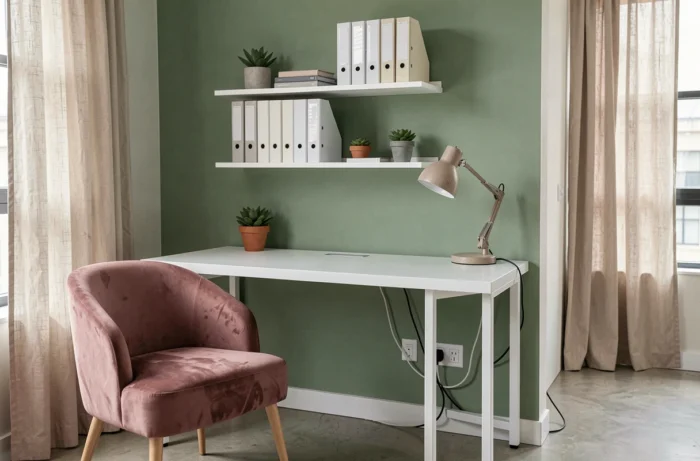
Color Palette: What Works in Practice
Neutral shades (off-white, light gray, beige) on large furniture pieces facilitate changes in decor without replacing everything. A gray sofa can adapt to ochre cushions this year, and teal the next.
A pop of bright color is reserved for easily replaceable items: accent chairs, stools, small entryway furniture. This approach avoids the “everything matches” effect that quickly dates an interior.
Lighting and Layout: Two Often Overlooked Levers
An elegantly designed piece of furniture poorly lit loses half its impact. Lighting alters the perception of materials, colors, and volumes. A dark wood sideboard placed in a corner without light visually disappears. The same sideboard, illuminated by a downward-facing wall sconce, becomes the focal point of the room.
Place your main furniture before deciding on lighting, not the other way around. The classic mistake is to fix light fixtures to the ceiling and then arrange the furniture around them. The result: the sofa ends up under a too-centered ceiling light, and the reading table is in the shadows.
Layout is as important as style. Leave a passage of at least 60 centimeters between two pieces of furniture for comfortable movement. In a living room, a deliberately empty space adds more elegance than an additional piece of furniture.
- Test several configurations before fixing anything to the wall (shelves, mirrors), by placing the furniture on the floor for a few days
- Orient the sofa towards the main source of natural light to enjoy daylight without a lamp
- Reserve tall furniture (wardrobes, bookshelves) for the walls farthest from the room’s entrance, to avoid overwhelming the perceived volume
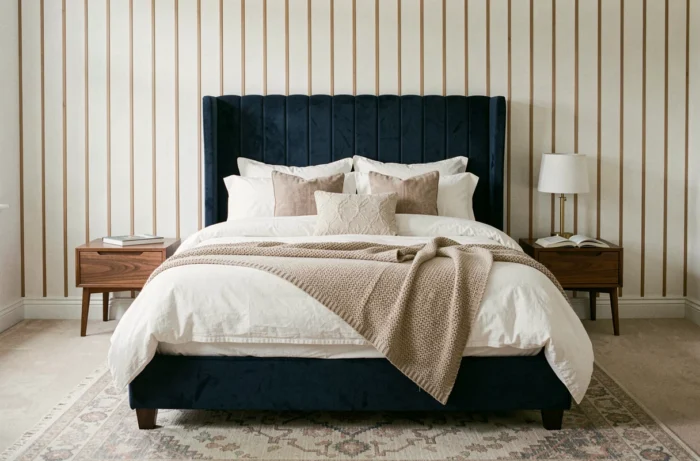
The choice of elegant and functional furniture relies less on current trends than on three concrete checks: the health compliance of the finished product, the actual sturdiness of the assemblies, and the compatibility between the dimensions of the furniture and the available space once circulation is taken into account. A successful interior is recognized by how effortlessly one can move around it, not by the number of pieces it contains.