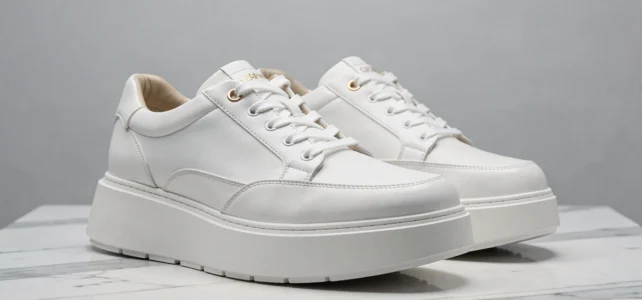
Serafini positions its wedge sneakers in a precise technical niche: that of Italian luxury made in the workshops of the peninsula, with full-grain leathers and hand-assembled soles. The expertise claimed by the brand is not generic marketing; it relies on a production chain located in the Marche, a historic region of Italian footwear.
Construction of Serafini wedge soles: what the assembly reveals
The Serafini wedge sole is not just a block of foam glued under an upper. The assembly is based on a high-density injected EVA midsole, covered with a layer of vulcanized rubber for the tread. This two-step construction allows for control over the height (generally around four centimeters on flagship models) without sacrificing walking flexibility.
The leather upper is attached using a hot pressure bonding process, sometimes reinforced with a stitched piping at the heel. On models like the Torino or the Vibe, we observe an interior lining in nappa leather that clearly distinguishes the construction from a fast-fashion wedge sneaker where synthetic textiles dominate.
The choice of full-grain cowhide in most collections, rather than split leather or synthetic alternatives, results in a visible grain and an evolving patina. Full-grain leather ages where synthetic materials degrade, a criterion rarely highlighted by competitors who merely mention “Italian leather” without specifying the type.
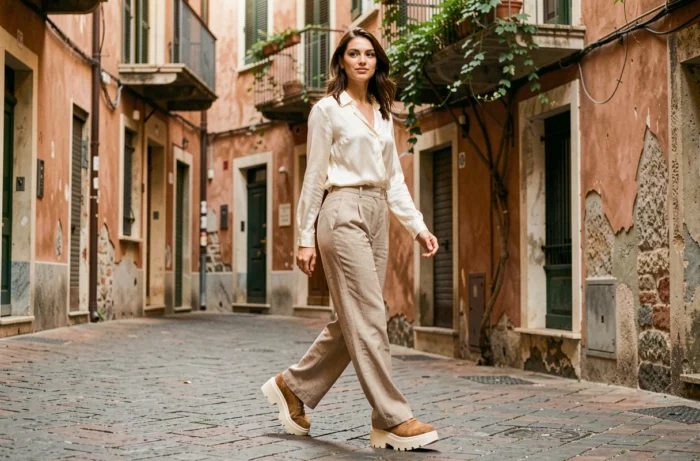
Serafini wedge sneakers and Y2K trend: a calculated positioning
The return of wedge silhouettes in spring-summer collections since 2024 is no coincidence. Media outlets like Cosmopolitan and L’Officiel document a clear resurgence of wedges and platforms linked to the Y2K revival, those aesthetic codes from the 2000s that favor volume underfoot and statement shoes.
Serafini capitalizes on this wave without being reducible to it. The brand was already producing thick-soled sneakers long before the trend returned, giving it a legitimacy that newer entrants in the wedge segment lack. To discover Serafini wedge sneakers in their diversity, it should be noted that the range includes both bold retro models (Copenaghen Vintage) and cleaner lines (Court, San Diego Low).
The re-legitimization of wedge sneakers also goes through street style visibility and celebrity looks. Since 2023, figures like Iris Law have been photographed wearing wedge-soled sneakers, helping to normalize a model that was long considered outdated after 2015. Serafini finds itself in the ideal shooting window: an existing product that meets an accelerating trend.
Italian leather and traceability: the industry’s requirements
The Italian leather market faces increasing pressures regarding traceability. Ongoing work within the industry, notably shared on professional networks like LinkedIn, aims to establish tracking protocols from the tannery to the finished product. For a brand like Serafini that claims entirely Italian manufacturing, this evolution represents both a constraint and a competitive advantage.
The verifiable origin of leather becomes a differentiating argument against brands that assemble imported materials in Italy without mentioning it. Informed consumers know that “Made in Italy” does not guarantee that the leather comes from Italian tanneries, only that the final assembly took place on the territory.
Serafini is part of a production basin (the Marche) where the proximity between tanners, cutters, and assemblers facilitates tight quality control. We recommend that discerning buyers check if the brand mentions the manufacturing region, not just the country.
Criteria to check on a luxury wedge sneaker
- Type of leather used: full grain, split, or leather crust. Only the first ages well and justifies a premium price.
- Composition of the sole: a worthy wedge sole combines high-density EVA for cushioning and rubber for grip, not just molded PVC.
- Interior lining: nappa leather or breathable technical textile. Low-quality synthetic materials cause excessive sweating and accelerate deterioration.
- Assembly area: mentioning a specific region (Marche, Veneto, Tuscany) provides more guarantees than a simple “Made in Italy.”
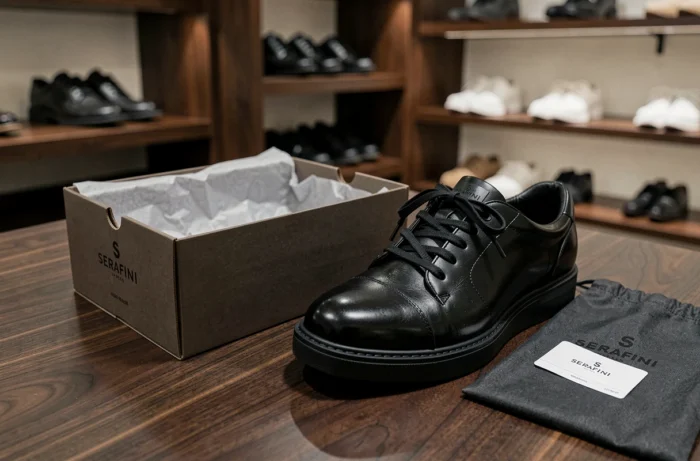
Serafini range: wedge models to know
The women’s collection from Serafini is structured around identifiable lines, each catering to a distinct use or style register. The Cannes and Malibù models play on summery finishes with perforated leathers or touches of pastel color. The Kensington adopts a more urban profile, with a monochrome smooth leather and a chunky sole.
The Copenaghen Vintage model remains the most representative of Serafini’s expertise in wedge sneakers. Its design combines a distressed leather upper, suede inserts, and a progressively heightening sole that elongates the silhouette without the “disguised heel” effect criticized in some competitors.
The Torino, more architectural, is aimed at those looking for a wedge sneaker capable of holding a semi-dressed look. Its line recalls certain collaborations between luxury houses and sports equipment manufacturers (like Prada or Valentino), but at a different price positioning.
Sizes and availability
The Serafini collections are available in a range of standard European sizes. The brand offers free shipping and returns via its official website, allowing for risk-free adjustments to choices. The fit tends to be true to size on smooth leather models, slightly tighter on python or textured leather finishes.
The luxury wedge sneaker segment remains a niche market where collections turn over quickly. Seasonal colors generally disappear within a few weeks, a factor to consider for buyers spotting a specific model.