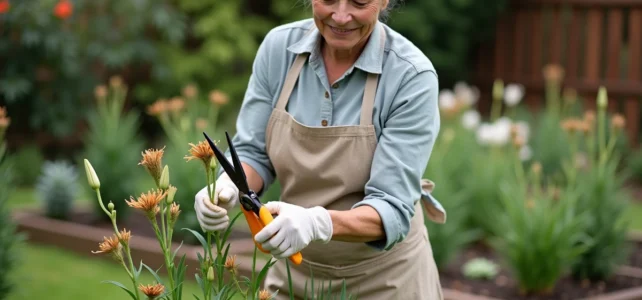
Lilies are among the most spectacular bulbous plants in the garden, but their blooming the following year largely depends on what happens after cutting the flower stalks. Cutting at the wrong time, overwatering, or ignoring the specific needs of each variety can compromise regrowth. Understanding the bulb cycle after flowering helps avoid the most common mistakes.
Foliage after flowering of lilies: a recharge organ not to be cut
The temptation to cut the yellowing foliage of lilies after flowering is strong. However, this premature cut deprives the bulb of its main source of energy to replenish its reserves.
After the petals fall, the leaves continue to photosynthesize for several weeks. This process directly feeds the bulb with nutrients, which will be stored to produce the blooms for the following year. The key action to remember: only cut the faded flower stalk, never the still green foliage.
The wait can last until autumn depending on the varieties and local climate. When the leaves are completely dry and detach without resistance, cutting them down to the ground is safe. By finding garden tips on D Kom Déco, one can see how this simple delay changes the vigor of regrowth.
Removing faded flowers before they form seeds is still recommended. Seed production diverts a significant portion of the bulb’s energy, to the detriment of storage in the underground scales.
Regrowth of Asian, Oriental, and Easter lilies: distinct behaviors
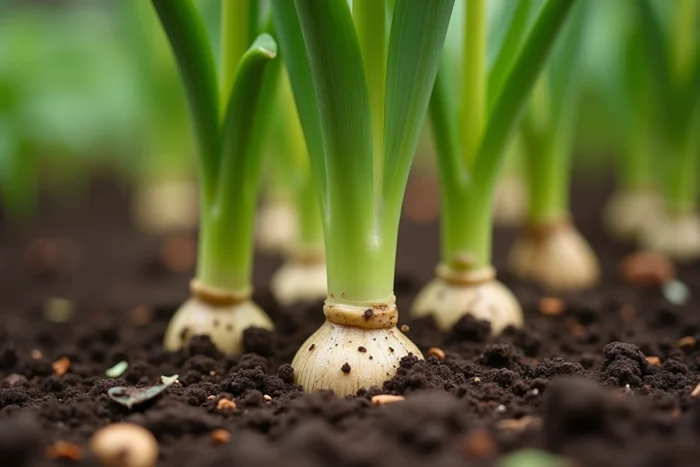
Treating all lilies the same way is an approximation that costs blooms. Field reports diverge on this point, and the differences between botanical groups deserve to be clearly stated.
Asian lilies: the most reliable in the ground
Asian lilies (Lilium asiatic) naturalize well in temperate climates. Their bulbs tolerate moderately cold winters and return year after year without heavy intervention. Their ability to naturalize makes them the safest choice for regular regrowth.
Oriental lilies: sensitive to winter moisture
Oriental lilies produce some of the most fragrant flowers, but their bulbs do not tolerate waterlogged soils in winter. In regions with high rainfall, insufficient drainage causes the scales to rot. A protective mulch and well-drained soil are conditions to be respected to hope for blooms the following year.
Easter lilies: a special case
The Easter lily (Lilium longiflorum) is often sold as a seasonal houseplant. Its hardiness in the ground remains limited, especially in the face of harsh winters. The available data does not guarantee systematic regrowth outdoors in a continental climate. In pots, its chances increase provided that watering is controlled during dormancy.
Post-cutting watering and bulb rot: the main trap
Several recent cultivation guides converge on one point: overwatering after flowering is the primary cause of non-regrowth of lilies. The lily bulb hates having its roots in stagnant water, whether in the ground or in pots.
After flowering, watering should gradually decrease. The surface of the soil should dry between waterings. As the winter dormancy period approaches, watering should be almost eliminated for potted lilies.
- In the ground: check that the soil does not retain water around the bulb. A compact clay soil requires the addition of coarse sand or gravel at the bottom of the planting hole to improve drainage.
- In pots: provide a draining substrate and a perforated container. Never leave a saucer full of water under the pot, especially in autumn and winter.
- If in doubt: push a finger into the soil a few centimeters. If the soil is still moist, postpone watering.
Gray mold (Botrytis) also affects the foliage in overly humid environments. Foliage that blackens before naturally yellowing indicates excess moisture, not simply the end of the vegetative cycle.
Soil, planting depth, and fertilization: the conditions for lily regrowth
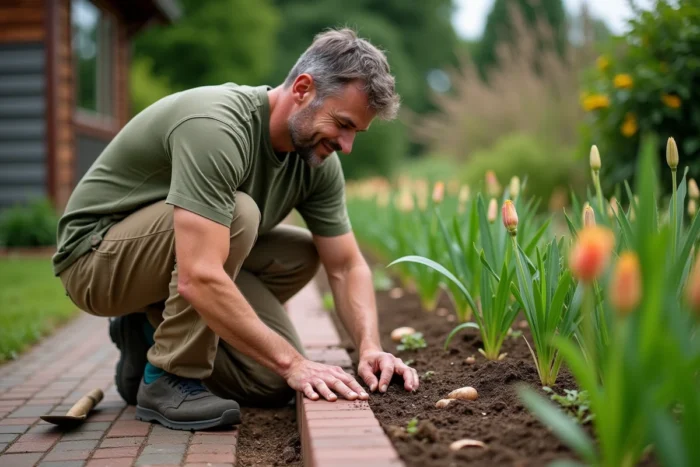
Regrowth also depends on what happens below the surface. A bulb planted too shallow or in depleted soil will produce at best foliage without flowers.
The recommended planting depth is about two to three times the height of the bulb. If too shallow, the bulb is exposed to frost and drastic temperature changes. If too deep, the stem struggles to emerge in spring.
Regarding fertilization, applying a potassium-rich fertilizer after flowering helps the bulb replenish its reserves. Nitrogen, on the other hand, promotes foliage at the expense of storage in the scales.
- Apply a fertilizer for bulbous plants (low in nitrogen, rich in potassium and phosphorus) once or twice between the end of flowering and the complete yellowing of the foliage.
- Mulch the soil with a layer of organic matter to maintain a stable temperature around the bulb in winter.
- Avoid universal nitrogen fertilizers like lawn types, which stimulate leaf growth without benefiting the next flowering.
Regrowth of potted lilies: managing dormancy
Potted lilies follow the same cycle as those in the ground, but in a limited substrate volume that amplifies the risks. Drying out is faster in summer, and waterlogging is more frequent in winter if drainage is poorly designed.
Once the foliage is completely dry, the pot can be stored in a cool, dark place (garage, unheated basement). The bulb needs a cold period to initiate the next flowering. Skipping this dormancy phase is a common cause of lilies producing leaves without ever blooming again.
In the following spring, when the first shoots appear, resume light and gradual watering. Repotting in fresh, draining substrate at this stage yields better results than reusing exhausted potting soil from the previous season.
The regrowth of lilies relies on a sequence of simple but chronologically precise actions. Preserved foliage, controlled watering after flowering, well-drained soil, and a true winter resting period cover most situations. The type of lily planted determines the rest, and this is often the variable that gardeners neglect first.