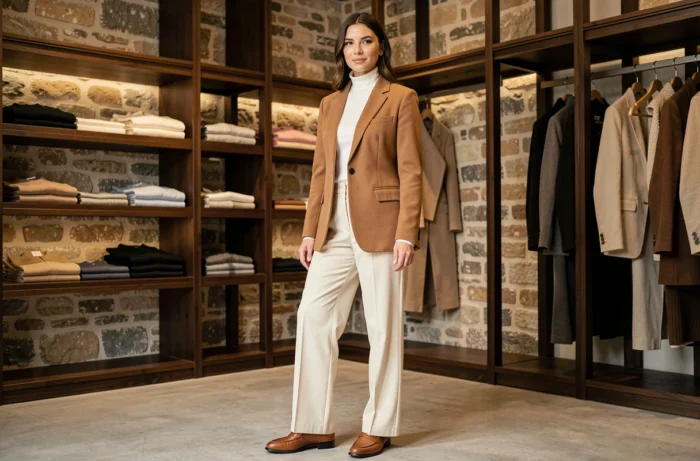
Each seasonal return reignites the same mechanism: new cuts, new colors, and a few key pieces shake up dressing habits. The fashion trends of this season are not limited to a change in palette. They also reflect European regulatory developments that alter the way clothes are produced, sold, and recycled.
European textile regulation: what changes for your wardrobe
Have you noticed that some brands are communicating more about the traceability of their garments? This movement is not spontaneous. It responds to a legal framework that is undergoing significant transformation.
Since July 19, 2026, large companies can no longer freely destroy their unsold textiles in the European Union. They must declare the eliminated products, the reasons, and the channels used. Medium-sized enterprises will be affected starting in 2030.
Meanwhile, a digital passport for textile products is being prepared. The associated European register was launched in July 2026, and specific requirements for clothing are expected in a delegated act planned for 2027. In practical terms, each item will need to provide information about its composition, origin, durability, and repair options.
For buyers, this means a gradual access to reliable information before purchase. Rather than relying solely on a “organic cotton” label, it will be possible to verify the exact origin of the fabric. This transparency is already influencing current collections: brands are investing in traceable and sustainable materials to anticipate these obligations.
Exploring the fashion section of Conseils Beauté allows you to spot the brands that are integrating these requirements into their new collections.
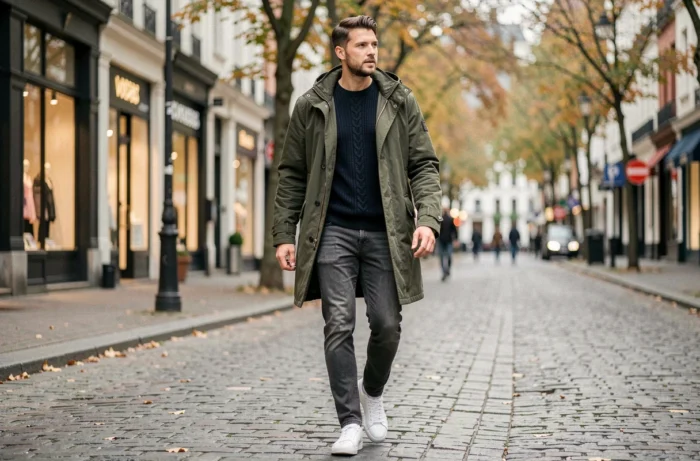
Trendy silhouettes and cuts: focus on structure rather than volume
Previous seasons pushed oversized styles to their maximum. This season takes a turn. Cuts are slightly tightening without reverting to form-fitting styles.
The structured blazer as the pivot of the look
The blazer remains the most versatile piece in the wardrobe. Its current version features pronounced shoulders and a slightly fitted waist. Worn over straight jeans or fluid trousers, it is enough to structure an entire outfit.
Why does this piece work so well? Because it adapts to almost all body types. A well-cut blazer replaces three jackets in a wardrobe. It transitions from the office to the weekend effortlessly.
Wide trousers and midi skirts: two complementary alternatives
Straight or slightly flared trousers dominate the collections. They elongate the silhouette and can be worn with both sneakers and ankle boots. The midi skirt, on the other hand, is making a comeback in heavier materials (wool, gabardine) that give it a good drape.
- High-waisted straight trousers suit silhouettes looking for verticality, especially when paired with a tucked-in top
- The pleated or straight midi skirt creates a balance with a fitted top, without adding bulk
Autumn color palette: beyond black and beige
Black remains a reflex, and beige continues to dominate the neutral wardrobe. This season introduces bolder variations without falling into eccentricity.
Burgundy is establishing itself as the signature color of the season. It works in a total look or as a unique touch (bag, scarf, ankle boots). Its depth allows it to replace black in dressy pieces.
Chocolate and khaki complete this earthy palette. These shades combine easily with each other and with off-whites or ecrus. A khaki trouser paired with a chocolate sweater creates a cohesive outfit without appearing uniform.
For those who want to introduce color gradually, one accessory is enough. A burgundy bag or a chocolate belt can transform a monochrome look without disrupting habits.
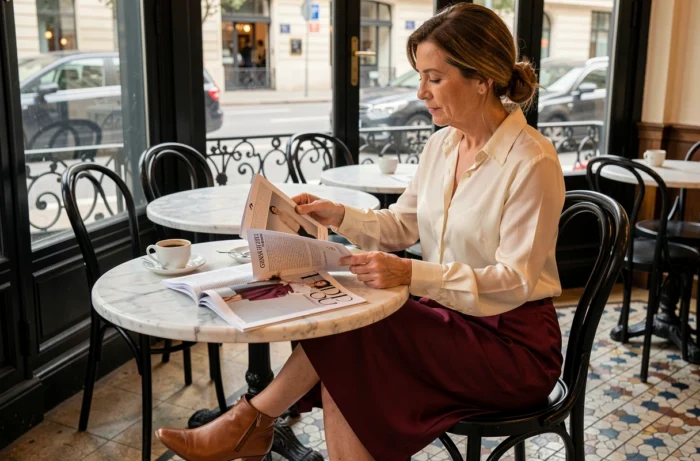
Second-hand and maintenance: extending the lifespan of your trendy pieces
The rise of second-hand is no longer a marginal trend. More and more buyers are turning to second-hand clothing, and this movement is accelerating.
The European directive (EU) 2025/1892 provides for the establishment of national systems for the collection, sorting, and recycling of textiles, funded by producers. These systems must be operational by April 17, 2028. This will structure the second-hand market and facilitate access to quality refurbished pieces.
In the meantime, maintaining clothing is becoming an integral part of style. Washing at low temperatures, using a mesh bag for delicate items, repairing rather than replacing: these actions extend the lifespan of a blazer or trousers by several seasons.
- Check care instructions before purchase, especially for blended materials that do not handle dry cleaning well
- Invest in a steam iron rather than a traditional iron, which is less aggressive on fibers
- Store wool pieces with natural moth protections (cedar, lavender) to prevent damage between seasons
Enhancing your style this season involves both the choice of pieces and how to care for them. Structured cuts, an earthy palette, and the rise of second-hand fashion are redefining the contours of a sustainable wardrobe. The next step, with the digital passport planned for 2027, will give each garment a complete identity card, from fiber to hanger.